
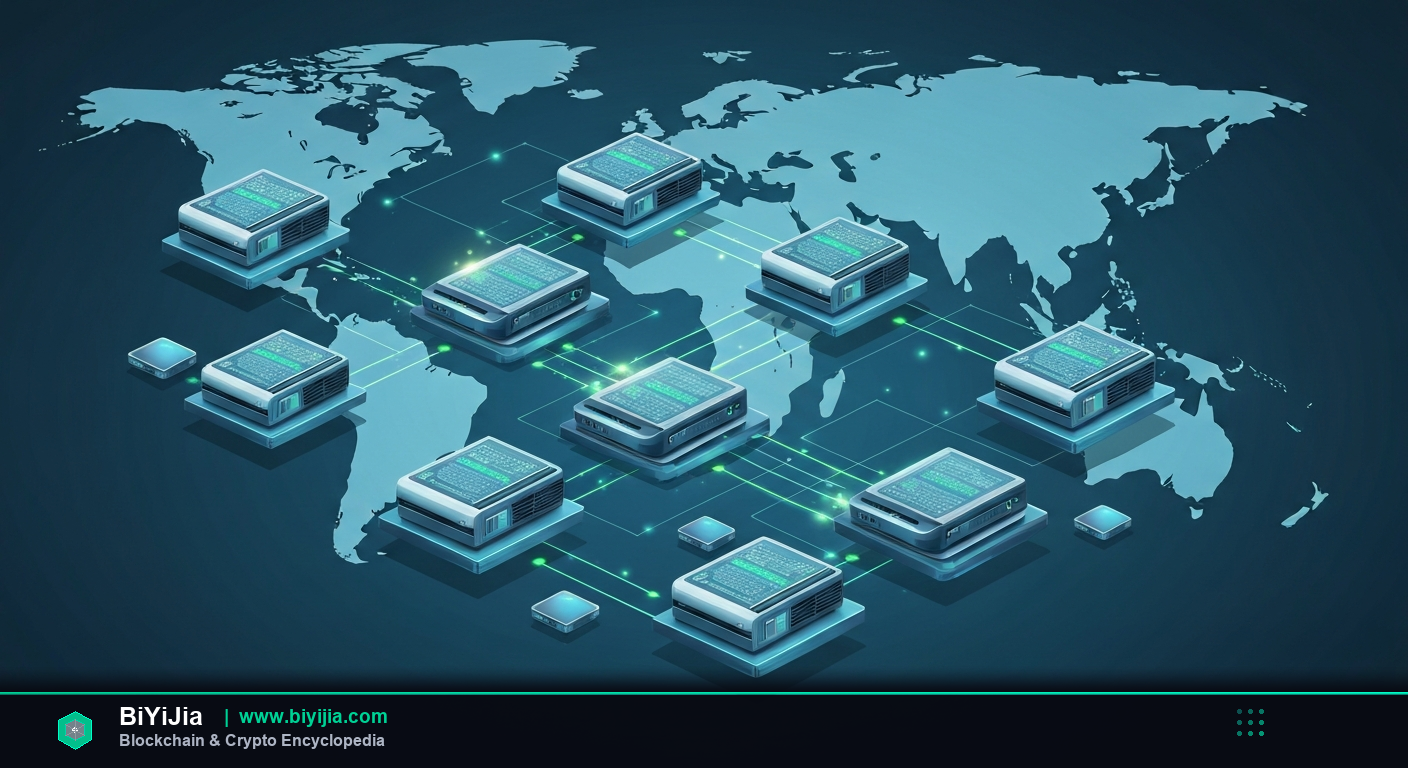
Distributed Ledger refers to a synchronized, tamper‑resistant database spread across multiple participants, eliminating the need for a central authority.
Key Takeaways
- Definition: A decentralized record‑keeping system where every participant holds a copy of the data.
- Core features: Immutability, consensus, and peer‑to‑peer validation.
- Real‑world use: Supply‑chain tracking, cross‑border payments, and digital identity.
- Traditional contrast: Unlike a single database owned by a bank, a distributed ledger removes the single point of control.
- Risk warning: Poor governance or weak consensus can expose the network to forks and attacks.
What Is Distributed Ledger?
In plain English, a distributed ledger is a shared database that lives on many computers at once.
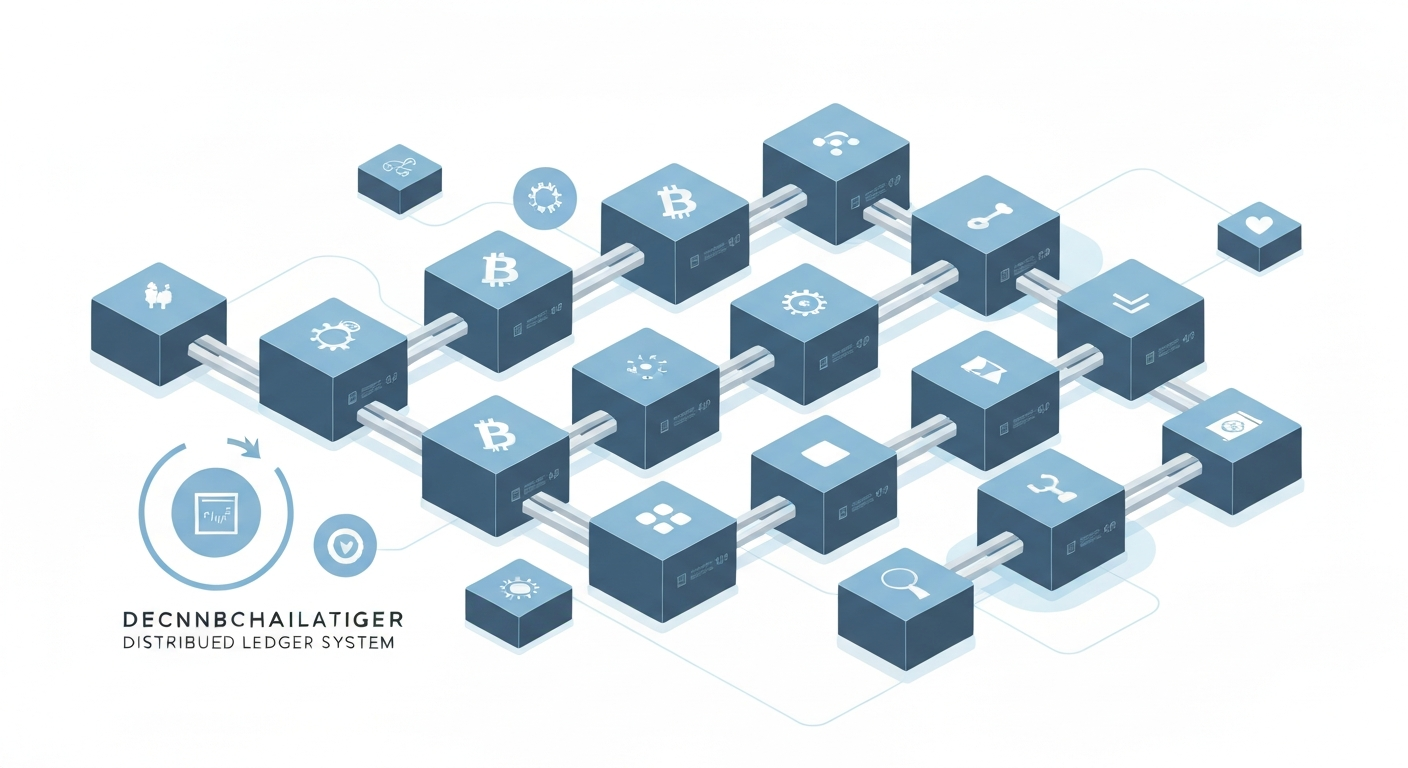
Technically, the ledger stores transactions in blocks or entries that are cryptographically linked, and every node validates new entries through a consensus algorithm. The result is a single source of truth that no single participant can rewrite without the network’s agreement.
Think of it like a group chat where every member sees the same conversation history, and no one can delete a message without the others noticing.
How It Works
- Data entry: A participant creates a transaction and broadcasts it to the network.
- Validation: Nodes verify the transaction against protocol rules (e.g., signature authenticity, double‑spend checks).
- Consensus: The network runs a consensus mechanism—Proof‑of‑Work, Proof‑of‑Stake, or Byzantine Fault Tolerance—to agree on the order of transactions.
- Commitment: Once consensus is reached, the transaction is added to the ledger and becomes immutable.
- Replication: Every node updates its copy, ensuring that the ledger stays synchronized across the globe.
Core Features
- Immutability: Once recorded, entries cannot be altered without overwhelming the network.
- Decentralization: No single entity controls the data; power is distributed among participants.
- Transparency: Every participant can inspect the full transaction history.
- Security: Cryptographic hashing and consensus protect against tampering.
- Scalability: Modern DLT designs aim to handle thousands of transactions per second.
- Programmability: Smart‑contract capabilities let developers embed business logic directly on the ledger.
Real‑World Applications
- IBM Food Trust: A supply‑chain platform that tracks over 200 million food items annually, boosting traceability for major retailers.
- RippleNet: Enables cross‑border payments for banks, processing more than $250 billion in transaction volume in 2025.
- Decentralized Finance (DeFi): Protocols like Aave and MakerDAO use distributed ledger technology to offer lending, borrowing, and stablecoins without intermediaries.
- VeChain: Provides anti‑counterfeit solutions for luxury goods, recording over 10 million product events since launch.
- Hyperledger Fabric: An enterprise‑grade framework adopted by over 300 organizations for private permissioned ledgers.
Comparison with Related Concepts
Distributed Ledger vs Blockchain: All blockchains are distributed ledgers, but not all distributed ledgers use a chain of blocks. For example, IOTA’s Tangle stores data in a directed acyclic graph rather than a linear chain.
Distributed Ledger vs Decentralization: Decentralization describes the distribution of authority, while a distributed ledger is the technical artifact that enables that distribution.
Distributed Ledger vs Node: A node is any device that participates in the network; the ledger is the data structure they collectively maintain.
Distributed Ledger vs Consensus: Consensus is the process that ensures all nodes agree on the ledger’s state; without consensus, a distributed ledger would quickly diverge.
Risks & Considerations
- Governance gaps: Without clear rules, communities may fork, creating competing ledgers and market confusion.
- Scalability limits: Early DLT implementations struggled to process more than a few hundred transactions per second, leading to congestion.
- Regulatory uncertainty: Jurisdictions differ on how to treat assets recorded on distributed ledgers, affecting compliance.
- Security vulnerabilities: Bugs in consensus code or smart contracts can be exploited, as seen in the 2023 Wormhole bridge hack.
- Data privacy: Public ledgers expose transaction metadata, which may conflict with GDPR or other privacy laws.
According to the World Economic Forum, over 1.2 billion digital assets were recorded on distributed ledgers in 2025, up 45 % from 2023. A 2024 Gartner survey found that 68 % of large enterprises plan to integrate DLT into supply‑chain operations by 2027.
Frequently Asked Questions
What is a distributed ledger and how does it differ from a traditional database?
A distributed ledger is a database replicated across many nodes, each of which validates changes through consensus. Traditional databases rely on a single administrator to write and enforce rules, creating a central point of failure.
Can I build a distributed ledger without using blockchain?
Absolutely. Technologies like IOTA’s Tangle, Hedera Hashgraph, and Ripple’s ledger use DAGs or other structures that achieve the same decentralization without chaining blocks.
Is distributed ledger technology (DLT) suitable for small businesses?
Yes, especially when you need immutable audit trails or transparent supply‑chain data. Permissioned DLT platforms like Hyperledger Fabric let small firms run a private network with low entry costs.
How secure are distributed ledgers against hacking?
Security stems from cryptographic hashing and consensus. While the ledger itself is resistant to tampering, surrounding layers—such as smart contracts or user interfaces—can still be vulnerable.
Do distributed ledgers consume a lot of energy?
Energy use depends on the consensus algorithm. Proof‑of‑Work blockchains are energy‑intensive, but many modern DLT solutions employ Proof‑of‑Stake or BFT, which are far more efficient.
Summary
Distributed Ledger is a decentralized, tamper‑proof database that removes the need for a central authority, powering everything from global payments to supply‑chain transparency. Understanding its mechanics, benefits, and risks equips you to navigate the evolving landscape of [internal link: Blockchain], [internal link: Decentralization], [internal link: Node], and [internal link: Consensus].